D.C.'s affluent liberals may be boycotting the Kennedy Center over Donald Trump, but working-class Washingtonians were priced out a decade ago.
When it comes to Donald Trump, media narrative is king.
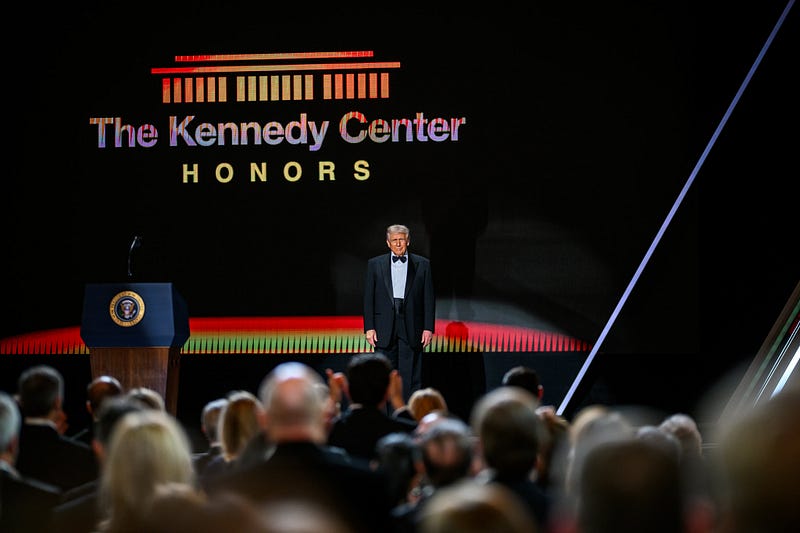
The current line goes something like this: Donald Trump interfered with the Kennedy Center, slapped his name onto it, offended the cultural class, and now enlightened performers are cancelling appearances in protest. Empty seats, we’re told, are a moral stand — a refusal to legitimize Trumpism.
That’s the story, but it isn’t the whole truth.
Far from it.
Because if artists and institutions wanted to make a meaningful political statement, they could have done it years ago — when the Kennedy Center quietly became unaffordable to the very people it was supposedly built to serve.
Long before this Trump presidency, long before the rebranding drama and the cancellations, empty seats were already common. Anyone who attended regularly knows this. You could look around and see large swaths of unfilled chairs — not because Washington lacks people who love music and theater, but because the price of entry had already narrowed the audience to a comfortable elite.
The Kennedy Center didn’t become inaccessible because of Donald Trump.
It became inaccessible because elitism became the operating procedure.
Programming grew ever safer and more donor-friendly. The same familiar names. The same risk-averse curation. Fine performances, perhaps — but increasingly stale, repetitive, and disconnected from the city it sits in. “Access” became a talking point, a special initiative, something you do around the margins — not the core mission of a national cultural institution.
The biggest barrier was never ideology. It was cost.
A Kennedy Center night isn’t $120 or $150. That’s the polite fiction. Once you factor in reality, it’s closer to $400–$500 for two people, even if nothing extravagant happens.
Spell it out honestly:
Tickets: $120–$180 each (often more)
Parking or rideshare: $30–$60
Dinner — even modest: $80–$120
Drinks and incidentals: $30–$50
That’s not culture: That’s a financial barrier most Washington households can’t surmount, no matter whose name in on the marquee.
For working people in D.C. — government staffers, teachers, aides, contractors, service workers — that’s not a casual night out. That’s rent money. That’s groceries. That’s something you plan around, or more often, quietly rule out.
And here’s where the current moral posturing rings hollow.
In the very same city, at the Library of Congress, you can hear world-class chamber music, serious contemporary composers, and international performers — for free. No donor tiers. No soft signals about who belongs. No $60 valet parking garages attached to the experience.
Same city. Same potential audience. Completely different philosophy.
So when performers now cancel Kennedy Center appearances and frame it as a courageous political act, it’s hard not to notice what they didn’t rebel against. They didn’t rebel when ticket prices climbed beyond the reach of ordinary Washingtonians. They didn’t rebel when access became an afterthought. They didn’t rebel when the institution drifted into cultural stagnation, protected by prestige and hollow philanthropy.
Only now — when the politics are uncomfortable for them — does outrage suddenly appear.
That’s not resistance. It’s snobbery.
If the Kennedy Center is meant to be a national cultural home, then affordability, openness, and creative vitality should be non-negotiable. You don’t get to rediscover principle only when power shifts hands — while ignoring the long-standing exclusion that made the place feel hollow to begin with.
The empty seats aren’t a protest.
They’re a consequence.
And they didn’t empty because of Donald Trump.
(Contributing writer, Brooke Bell)